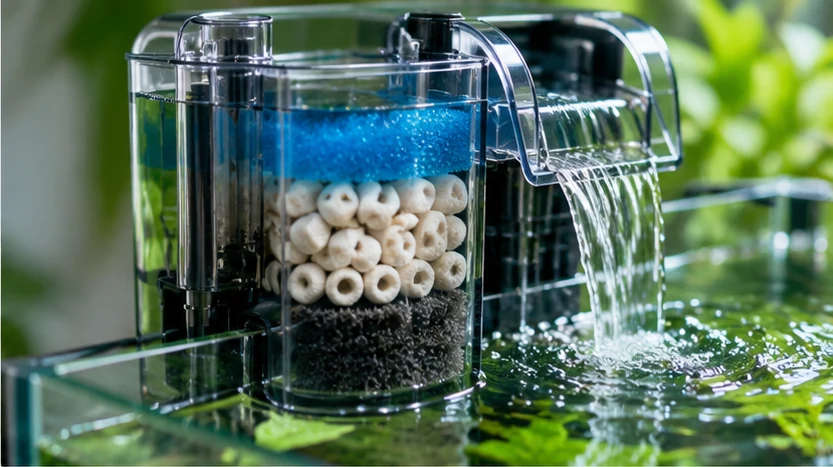
When several fish become distressed at once, suspect an environmental cause first. Low oxygen, ammonia, nitrite, chlorine/chloramine, temperature failure or chemical contamination can affect multiple animals rapidly. Do not begin by adding medication.
First 5–10 minutes
- Increase surface agitation and aeration immediately if fish are gasping or congregating at the surface. Check that the filter outlet is moving water and add an air pump if available.
- Check that the filter and heater are powered and operating. Restore circulation safely; do not put hands into damaged electrical equipment.
- Remove dead fish and obvious decaying material. Stop feeding while the cause is investigated.
- If contamination is suspected, stop the source: remove aerosols/chemical exposure, disconnect unsafe equipment only if safe, and retain a sample or packaging of the suspected substance.
Test and inspect
- Test ammonia and nitrite immediately. Also check temperature and pH; test chlorine where contamination or untreated tap water is suspected.
- Check filter flow, blocked intakes, impeller, air pump, surface film and recent maintenance.
- Review all recent events: new fish, water change, filter cleaning, medication, fertiliser, household spray, paint, smoke, metals or accidental chemical entry.
- Compare with source-water results if a water supply issue is possible.
Water changes and stabilisation
- Use a properly conditioned, temperature-matched partial water change when test results or suspected contamination indicate it is needed.
- For severe ammonia/nitrite events, repeated water changes may be necessary, guided by repeat testing and specialist advice. Maintain aeration and biofiltration.
- Avoid abrupt pH or temperature swings. If the tank has been neglected for a long time, sudden large changes can create additional toxicity or shock; seek advice for staged correction.
- Do not replace all filter media or sterilise the aquarium during an emergency.
After the immediate crisis
- Test repeatedly until readings are stable and fish behaviour returns to normal. Record the event and actions taken.
- Identify and correct the cause before restocking. Review feeding, stocking, filter capacity, maintenance intervals and equipment reliability.
- Do not add replacement fish immediately after unexplained deaths. Seek a diagnosis if illness or contamination remains possible.
- Use the A–Z Problem Solver guides for ammonia spike, nitrite spike, filter failure, temperature problem, toxic contamination and fish deaths.
Get urgent help when
- Fish continue gasping or losing balance despite improved aeration and water-quality action.
- Deaths are continuing, multiple species are affected, or a chemical exposure is suspected.
- There are severe lesions, abnormal swimming or signs consistent with infectious disease. Contact an aquatic veterinarian or qualified fish-health professional.
Important: Aquarium conditions and species requirements vary. Use species-specific advice and test results; these guides are educational and are not a veterinary diagnosis or a guarantee of compatibility.
Sources and further reading
← Back to the Aquarium Care Library · Open the Problem Solver A–Z